
European Car Maintenance Schedule: What to Service and When
A plain map of what a BMW, Mercedes, Audi, VW, Volvo, Porsche, or MINI actually needs by mileage and by time, plus how Florida heat pulls a few of those intervals in. No scare tactics, no parts cannon, just the schedule.
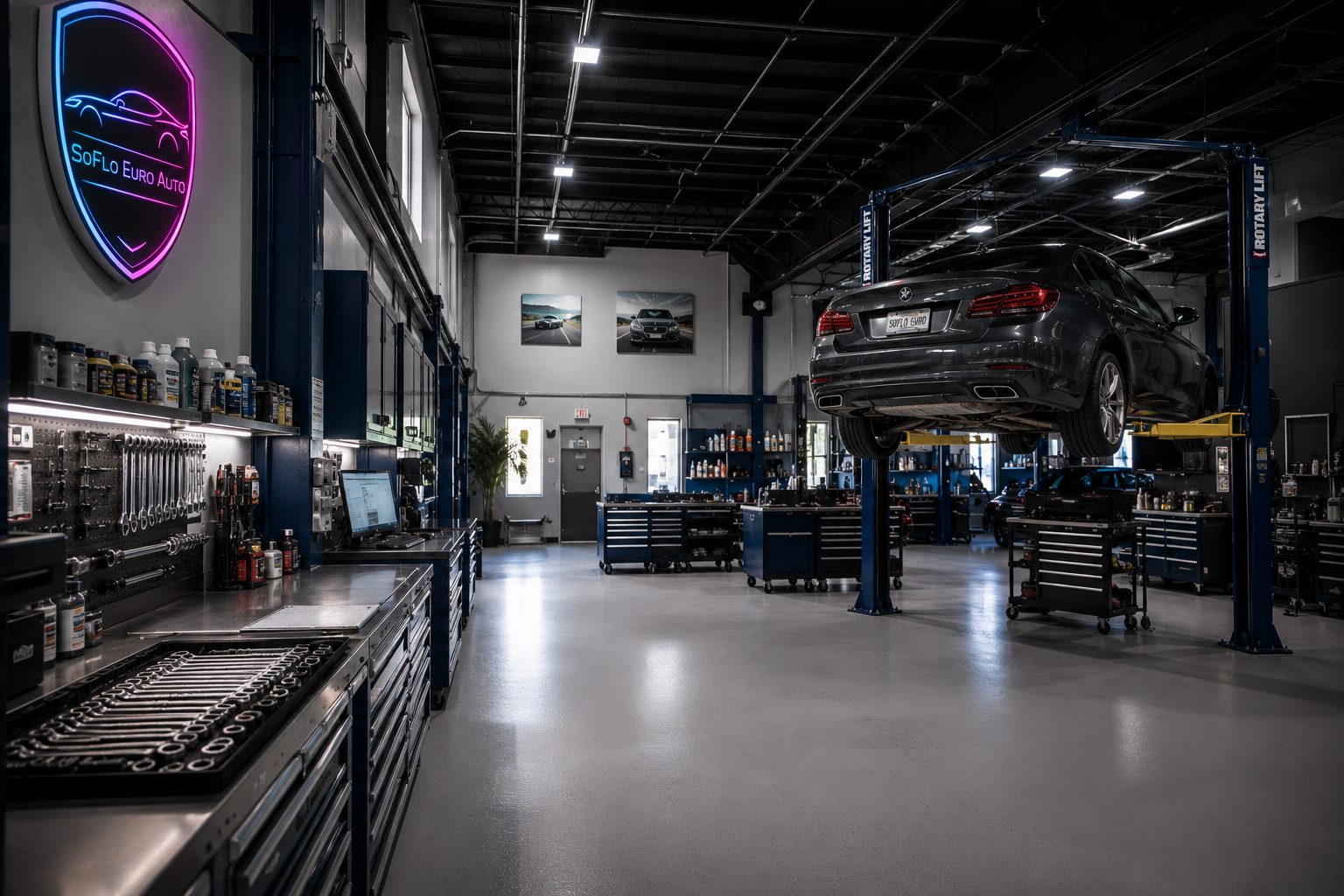
European cars reward a schedule and punish neglect. The engineering that makes a BMW, Mercedes-Benz, Audi, Volkswagen, Volvo, Porsche, or MINI feel the way it does also means the fluids, filters, and wear items expect to be serviced on time, with the right specifications. Miss them and small jobs turn into the expensive ones dealers quote.
This guide lays out a practical European car maintenance schedule by mileage and by time, then explains why several of the intervals matter more here in South Florida. Every number below is a general guide. Exact intervals vary by make, model, engine, and year, so treat your owner's manual and service booklet as the final word and use this as the map.
The European car maintenance schedule at a glance
Use the ranges below as a starting point. If you split the difference and lean toward the shorter end in stop-and-go Broward traffic and constant heat, you will rarely be wrong.
| Service | Typical interval | Why it matters |
|---|---|---|
| Synthetic oil & filter | 5,000 to 10,000 miles | Protects turbos, timing chains, and bearings. Heat shortens oil life. |
| Tire rotation | Every oil service | Even wear, better grip, longer tire life. |
| Cabin & engine air filters | 15,000 to 30,000 miles | Airflow and AC performance. Dust and pollen clog them faster here. |
| Brake fluid flush | Every 2 years | Fluid absorbs moisture. Humidity makes this non-negotiable. |
| Coolant / antifreeze | ~4 to 5 years or per manual | Overheating protection. Critical in sustained Florida heat. |
| Spark plugs | ~40,000 to 60,000 miles | Clean ignition, fuel economy, no misfires. |
| Transmission fluid & filter | ~60,000 to 100,000 miles | "Lifetime" fluid still degrades with heat. See below. |
| Carbon / walnut-shell cleaning | Evaluate at higher mileage | Direct-injection valve deposits. Varies widely by engine. |
| Timing belt (if equipped) | Per manual, often ~60,000 to 100,000 miles | Belt failure can destroy an engine. Chains are checked, not scheduled. |
| Battery | ~3 to 5 years | Heat is the real killer. Must be registered or coded on many models. |
Oil changes and why European synthetic oil is different
Nearly every modern European engine is designed around full synthetic oil that meets a specific manufacturer approval, such as a BMW, Mercedes, or VW group standard printed on the bottle. These oils hold their viscosity under high heat, resist breakdown in turbocharged engines, and carry the additive package the engine's timing and valvetrain were built to expect. A generic bulk oil that only meets a broad rating is not the same thing, even if it pours the same.
Factory schedules often stretch to 10,000 or even 15,000 miles, largely to lower the advertised cost of ownership. In real driving, and especially in South Florida heat and short trips, many owners are more comfortable in a 5,000 to 7,500 mile window. Whatever interval you pick, the specification matters as much as the mileage. Our European oil change service uses oil that meets your car's approval and the correct filter, not whatever is cheapest on the shelf.
Brakes and cooling: the two-year and multi-year items
Brake fluid is hygroscopic, which means it pulls moisture out of the air over time. Water in the system lowers the boiling point, softens the pedal, and corrodes expensive ABS and stability-control hardware. That is why most European makers call for a brake fluid flush about every two years regardless of mileage. In humid Florida, keep that interval honest.
Coolant is the other fluid people forget until the temperature gauge climbs. Most European coolants are long-life, but long-life is not forever. Follow the manual, usually somewhere in the four to five year range, and have the system pressure-tested if you see any weeping at hoses, the water pump, or plastic housings that go brittle with heat. Brake and cooling work runs together often enough that we group it under our brake and cooling service, because a car that stops well and runs cool is the baseline for everything else.
Spark plugs, transmission fluid, and the "lifetime" myth
Spark plugs on European engines typically last somewhere around 40,000 to 60,000 miles, though direct-injection and high-output engines can differ. Worn plugs show up as rough idle, hesitation, or a check-engine light for a misfire, and replacing them on schedule protects the coils and catalytic converter downstream.
Then there is the transmission. Many BMW, Audi, and VW automatics are sold as having lifetime fluid. In practice, lifetime usually means the length of the warranty, not the length of the car's life. The automaker is often betting the original owner sells before it matters. Heat degrades automatic transmission fluid, and heat is exactly what we have here. Plenty of independent European specialists still recommend a fluid and filter service somewhere in the 60,000 to 100,000 mile range on ZF and DSG-style units to keep shifts crisp and avoid a rebuild. Intervals vary by transmission, so ask about your specific gearbox rather than assuming sealed for life means serviced never.
Carbon cleaning, timing belts, and battery registration
Most late-model European engines use direct injection, where fuel is sprayed straight into the cylinder instead of washing over the back of the intake valves. That is efficient, but it lets carbon build up on the valves over tens of thousands of miles, which can cause a rough idle, misfires, or lost power. The fix is a walnut-shell blasting of the intake, and the right timing depends heavily on the engine and how it is driven, so it is best evaluated during diagnostics rather than forced onto a fixed number.
Timing components split into two camps. Engines with a timing belt need it replaced on a strict schedule, frequently in the 60,000 to 100,000 mile range depending on the model, because a snapped belt can bend valves and wreck the engine. Engines with a timing chain are designed to last much longer and are inspected rather than replaced on a set interval, though chains, guides, and tensioners on certain older engines are known wear points worth watching. Your manual tells you which camp your car is in.
Batteries deserve their own note. On many BMW, Mercedes, Audi, and VW models the new battery must be registered or coded to the car so the charging system treats it correctly. Skip that step and you can shorten the battery's life and trigger warnings. We handle battery registration and coding in-house, along with the adaptations that European cars expect after certain repairs.
The Florida-heat angle
A maintenance schedule written for a mild climate undersells what sustained heat does to a car. Three systems take the brunt of it here in Coral Springs and across northwest Broward.
- Battery: heat, not cold, is the bigger long-term killer of batteries. Expect a shorter service life than the sticker suggests and test it before it strands you.
- Cooling system: constant high temperatures stress hoses, the water pump, and plastic coolant housings that grow brittle. A cooling failure in traffic can escalate to head-gasket territory fast.
- Air conditioning: your AC works harder and longer here than almost anywhere, so weak cooling, odd smells, or a compressor that cycles oddly are worth catching early rather than in August.
None of that means servicing on fear. It means a few intervals, coolant condition, AC performance, and battery health, deserve a look sooner than a northern schedule assumes, even before the odometer hits the number.
How to stay on schedule without overpaying
You do not need the dealer to keep a European car on its factory schedule. An independent specialist with the right diagnostics, the correct oil approvals, and OEM-quality parts can perform the same scheduled maintenance and stamp your service records, usually for less. If you are weighing your options for routine service and repairs, our overview of European auto repair in Coral Springs explains how the independent lane works. You can also browse the rest of the SoFlo Euro Auto blog for model-specific guides.
The simplest approach is to anchor everything to the oil service. Every time the car is in for oil, we rotate the tires, scan for stored codes, check fluid condition and levels, and flag what is coming up so nothing sneaks past its interval. That way the two-year and higher-mileage items never surprise you.
Tell us the car
Give us the brand, model, year, and mileage. We line it up against the factory schedule.
Inspect and quote
We check fluids, filters, brakes, and codes, then quote only what is actually due. If a warning is already lit, start with why your check engine light is on.
Service to spec
Correct oil approvals and OEM-quality parts, with photos of what came off and went on.
Track what is next
You leave knowing the next interval, so the two-year items never catch you out.
European car maintenance FAQs
How often should I change the oil in a European car?
Most BMW, Mercedes, Audi, VW, Volvo, Porsche, and MINI models call for full synthetic oil, and many owners are comfortable in a roughly 5,000 to 7,500 mile window rather than stretching to a 10,000 to 15,000 mile factory maximum. In South Florida heat and stop-and-go driving, the shorter end tends to protect turbochargers and timing components better. Always confirm the grade and interval in your owner's manual, since it varies by model and year.
Is transmission fluid really lifetime fluid?
Lifetime fill usually means the fluid is expected to last the warranty period, not the full life of the car. Many independent European specialists still recommend a fluid and filter service somewhere in the 60,000 to 100,000 mile range on ZF and DSG style transmissions to protect them from heat. Intervals vary by model and year, so check your manual and ask about your specific gearbox.
How often does brake fluid need to be flushed?
European manufacturers commonly call for a brake fluid flush about every two years regardless of mileage, because brake fluid absorbs moisture over time. Florida humidity makes that two year interval worth keeping. It preserves pedal feel and protects the ABS and stability control hydraulics.
What is carbon cleaning and does my car need it?
Many modern European engines use direct injection, where fuel no longer washes over the intake valves. Carbon can build up on those valves over tens of thousands of miles and cause rough idle, misfires, or lost power. Walnut-shell intake cleaning removes it. Recommended timing varies widely by engine, so it is best evaluated during diagnostics rather than on a fixed number.
Do European cars need battery registration?
Many BMW, Mercedes, Audi, and VW models require the new battery to be registered or coded to the car so the charging system charges it correctly. Skipping this step can shorten battery life and trigger warnings. SoFlo Euro Auto handles battery registration and coding in-house when we replace a battery.
Does Florida heat change my maintenance schedule?
Yes. Sustained heat is hard on batteries, cooling systems, and air conditioning, and it accelerates fluid breakdown. In Coral Springs and northwest Broward we suggest checking coolant condition, AC performance, and battery health more often than a northern climate schedule assumes, even when the mileage number has not been reached.
SoFlo Euro Auto
11760 Wiles Rd #5, Coral Springs, FL 33076
Phone: (954) 951-9944
Email: service@sofloeuroauto.com
Hours: Monday–Sunday, 8am–6pm
Not sure what is due next on your BMW, Mercedes, Audi, VW, Volvo, Porsche, or MINI? Call seven days a week with your model and mileage and we will tell you exactly where you stand on the schedule, and what can wait.
Keep it on schedule, skip the dealer markup.
Correct oil approvals. OEM-quality parts. Serviced seven days a week.
📞 Call (954) 951-9944